Slow Food
  • Donate
  • Join us
  • Italian
  • English
Slow Food Foundation

Search

  • Home
  • About us
    • What is the Foundation?
  • What We Do
    • Slow Food Gardens in Africa
    • Slow Food Presidia
    • Ark of Taste
    • Slow Food Cooks’ Alliance
    • Earth Markets
    • What is the Narrative Label?
  • Get involved
    • Why Support Us
    • Italian Slow Food Presidia Sponsors
  • Multimedia
    • Publications
    • Video
    • Gallery
    • News archive
    • Photo archive
  • Contacts
Slow Food Foundation Slow Food Foundation
  • Home
  • About us
    • What is the Foundation?
  • What We Do
    • Slow Food Gardens in Africa
    • Slow Food Presidia
    • Ark of Taste
    • Slow Food Cooks’ Alliance
    • Earth Markets
    • What is the Narrative Label?
  • Get involved
    • Why Support Us
    • Italian Slow Food Presidia Sponsors
  • Multimedia
    • Publications
    • Video
    • Gallery
    • News archive
    • Photo archive
  • Contacts

Search

Home » 10.000 Orti in Africa » SOS Children’s Village Community Garden, Addis Abeba

SOS Children’s Village Community Garden, Addis Abeba

Back to the archive >

Ethiopia

Addis Ababa

SOS Children’s Village is a social-development organization that enables children to have a home with parents or caregivers. The first SOS Children’s Village in Ethiopia was opened in 1974, and including Addis Ababa SOS Children’s Village, the program is now running in seven regions in the country. In line with Slow Food’s Gardens in Africa project, the village wants to encourage residents to use the land to produce some of their food.

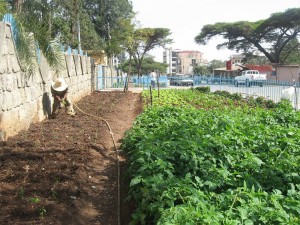
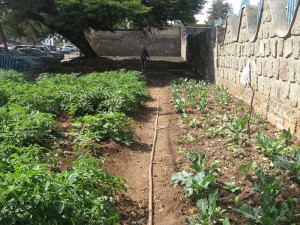
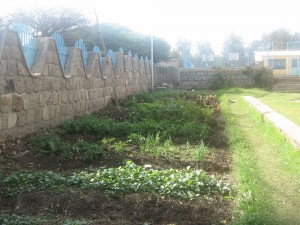
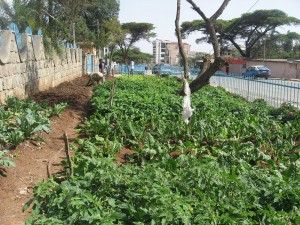
In Addis Ababa, the village is located in an old airport, below the St. Gabriel church, and has a kindergarten, family homes and youth facilities. The community garden is located along the fence, to the left and right of the entrance gate to the village. The garden area of 200 square meters is located right outside the fence at the main entrance and serves as a model for the surrounding communities to replicate. In the past this area was covered with lawn grass, but now it has been converted to a vegetable garden, planted with Swiss chard, local kale, cabbage, tomatoes, beetroot, carrots, fava beans, kidney beans and chili peppers. Herbs such as rosemary, rue, parsley and celery are also incorporated in the garden. The gardener, Sisay, is a very energetic and enthusiastic person who is passionate about his work. Together with members of the SOS Children’s Village community, he cultivates enough vegetables to supply the children within the families and the community’s staff. As a result, the community has to buy in fewer vegetables and consumes locally grown healthy food.

Sisay also helps families and youth to cultivate vegetables in their allocated garden spaces. After attending the 10,000 Gardens in Africa training held in Addis Abeba in February 2016, Sisay has absorbed the concept of ecological gardening and has decided to incorporate soil improvement, water harvesting and natural pest management techniques as well as increasing biodiversity.

Area
Old airport area, Addis Abeba

Coordinator
Tiginesh Mitik Beyene
Products

  • Chard
  • Tomato
  • Beetroot
  • Carrot
  • Fava bean
  • Bean
  • Chilies
  • Rue
  • Parsley
  • Celery
  • Curly kale
  • Rosemary

Slow Food in Ethiopia

Slow Food has been active in Ethiopia since 2006, launching numerous projects in support of the most vulnerable local communities: nomadic herders, traditional forest beekeepers, wild coffee harvesters, indigenous groups and others. Through the Presidia and working with the communities, training activities have been run to strengthen the organization of small-scale producers and to promote and improve the quality of various foods like honey, camel milk, coffee, traditional grains and spices. Slow Food coordinators promote agroecological techniques—applying them in school and community food gardens—in the most diverse ecosystems, from forests and highlands to nature reserves and semi-arid zones. They are also working to save biodiversity and traditional knowledge. A number of educational projects have objectives that include the involvement of young people and women and awareness-raising around themes of strategic importance at a national and international level: the privatization of resources, the use of toxic chemicals in agriculture, the right to land. Educational materials have been produced in Amharic and Oromo, the main local languages. Every year, Ethiopian delegates participate in Slow Food’s international events (Salone del Gusto and Terra Madre, Indigenous Terra Madre, Cheese, Terra Madre Giovani and more) as well as other events thanks to collaborations with different organizations.

Garden Informations

Type:Community Garden
Surface in m2:500
Coordinator:Tiginesh Mitik Beyene
Sibling with:Table for Two International

Photos

Subscribe to the newsletter

Slow Food gratefully acknowledges funding support from European Union. The contents of this website are the sole responsibility of Slow Food and the CINEA is not responsible for any use that may be made of the information contained therein.
Slow Food - P.IVA 02743970044 - Privacy Policy - Cookie Policy - All rights reserved
Powered by Blulab