Slow Food
  • Donate
  • Join us
  • Italian
  • English
Slow Food Foundation

Search

  • Home
  • About us
    • What is the Foundation?
  • What We Do
    • Slow Food Gardens in Africa
    • Slow Food Presidia
    • Ark of Taste
    • Slow Food Cooks’ Alliance
    • Earth Markets
    • What is the Narrative Label?
  • Get involved
    • Why Support Us
    • Italian Slow Food Presidia Sponsors
  • Multimedia
    • Publications
    • Video
    • Gallery
    • News archive
    • Photo archive
  • Contacts
Slow Food Foundation Slow Food Foundation
  • Home
  • About us
    • What is the Foundation?
  • What We Do
    • Slow Food Gardens in Africa
    • Slow Food Presidia
    • Ark of Taste
    • Slow Food Cooks’ Alliance
    • Earth Markets
    • What is the Narrative Label?
  • Get involved
    • Why Support Us
    • Italian Slow Food Presidia Sponsors
  • Multimedia
    • Publications
    • Video
    • Gallery
    • News archive
    • Photo archive
  • Contacts

Search

Home » 10.000 Orti in Africa » Gounwendmanegré Community Garden, Kirikodogo

Gounwendmanegré Community Garden, Kirikodogo

Back to the archive >

Burkina Faso

Nord

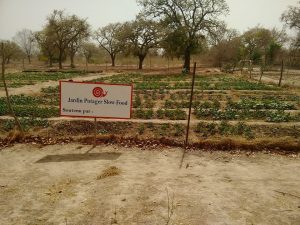
The Gouwendmanegré group garden is a community one. Basically, three groups work there. The Gouwendmanegré group garden is located to the north of the Kirikodogo village, 25 km from Bagaré. It is on a plain that holds water during the rainy season. The garden is barely 1 km from a water source obtained by the village in order to grow its garden. However, this source dries up in March. The garden is cultivated by women and children.
There are in all 32 women who own the squares, and the children who help them water, cultivate, harvest and sell. The women are between 25 and 50 years old, and the children are between 12 and 18. They are both students and non. The students water every non-work day and in the evenings.
The garden was created thanks to Mady Sankara, president of the AGP (“Association Génération Prévenue”), who organised more than 12 groups of women for different activities.
The Gouwendmanegré community garden is a 625m2 plot. Its soil is clayey and holds water during the rainy season. A common fountain is located 500 m from the garden and is used for watering the garden. There are at least 32 8 by 10 squares in this garden. They dig down 10 cm and add manure and straw, a bit of ash and chicken droppings.
The garden produces by subculturing, seeding and cuttings.
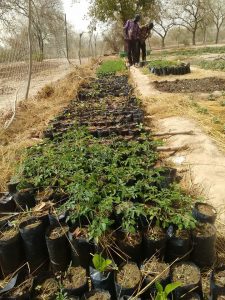
Each woman is responsible for her square, and the dead leaves, straw and manure are used to fertilize the soil; water is carried in on their heads, on bicycles, on push-carts and wheelbarrows to water the garden. To combat pests, they use ash and tobacco powder. Women are allowed to plant whatever they want in this garden, so they cultivate different vegetables (sorrel, local aubergine, beans, okra, cabbage, lettuce). A nursery of 1000 plants is watered by all the women. It consists of moringa, baobab, nereid, balanites, tamarind and nimier. During winter, medicinal herbs like “wantok”, "lélonéédo”, “kiengdo” and “lougo” are grown for consumption and to combat malaria. Balanite is part of the Ark of Taste Slow Food project. The products are mostly cultivated for family consumption but also to sell. Mady Sankara’s boutique in Yako is the ideal place to sell vegetables, medicinal herbs, balanite leaves and soap manufactured from the balanite fruit. The AGP has a restaurant called “the wonders of the savannah” in Yako, which buys bean and balanite leaves from the garden to make dishes eaten by the people.

Area
Kirikodogo Village, Boussou department, province of Zondoma, northern region

Coordinator
Ami Sinare
Products

  • Wood sorrel
  • Eggplant
  • Bean
  • Okra
  • Cabbage
  • Lettuce
  • Baobab
  • Tamarind
  • Moringa oleifera
  • African locust bean

Slow Food in Burkina Faso

Burkina Faso is characterized by a rich cultural diversity, with over 60 different ethnic groups and languages. Half of this landlocked West African country has an arid, Sahelian climate. Desertification and drought are some of its most serious problems, but there are many initiatives working towards integrated local development. As far back as 1987, President Thomas Sankara proposed reforming agriculture through the application of agroecological techniques in order to guarantee food sovereignty and the country’s independence. “Let’s produce in Africa, manufacture in Africa, and consume in Africa,” he famously said. “Let’s produce what we need and consume what we produce instead of importing goods.” The Slow Food network has had a presence here since 2004. Many agroecological school and community food gardens have been developed in different regions. The gardens have made it possible to develop the network and to start the important tasks of mapping traditional foods and dishes, identifying Presidia and supporting the food communities in the promotion of their unique, high-quality products. The first West African Terra Madre gathering was organized in Ouagadougou in February 2017, allowing the local network to join together and share their experiences with traditional foods, gastronomy and knowledge. This laid the foundations for the creation of an even stronger network, which now includes communities, associations and local authorities. Currently the network is focusing on involving cooks and chefs and identifying restaurants serving local food that is good, clean and fair.

Garden Informations

Type:Community Garden
Surface in m2:625
Slow Food Convivium:Boussou Convivium
Coordinator:Mady Sankara
Sibling with:Eataly, Italy

Photos

Subscribe to the newsletter

Slow Food gratefully acknowledges funding support from European Union. The contents of this website are the sole responsibility of Slow Food and the CINEA is not responsible for any use that may be made of the information contained therein.
Slow Food - P.IVA 02743970044 - Privacy Policy - Cookie Policy - All rights reserved
Powered by Blulab