Slow Food
  • Donate
  • Join us
  • Italian
  • English
Slow Food Foundation

Search

  • Home
  • About us
    • What is the Foundation?
  • What We Do
    • Slow Food Gardens in Africa
    • Slow Food Presidia
    • Ark of Taste
    • Slow Food Cooks’ Alliance
    • Earth Markets
    • What is the Narrative Label?
  • Get involved
    • Why Support Us
    • Italian Slow Food Presidia Sponsors
  • Multimedia
    • Publications
    • Video
    • Gallery
    • News archive
    • Photo archive
  • Contacts
Slow Food Foundation Slow Food Foundation
  • Home
  • About us
    • What is the Foundation?
  • What We Do
    • Slow Food Gardens in Africa
    • Slow Food Presidia
    • Ark of Taste
    • Slow Food Cooks’ Alliance
    • Earth Markets
    • What is the Narrative Label?
  • Get involved
    • Why Support Us
    • Italian Slow Food Presidia Sponsors
  • Multimedia
    • Publications
    • Video
    • Gallery
    • News archive
    • Photo archive
  • Contacts

Search

Home » 10.000 Orti in Africa » Awra Amba Community Garden

Awra Amba Community Garden

Back to the archive >

Ethiopia

Amhara

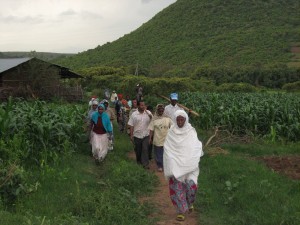
The Awra Amba community, home to 141 households amounting to 500 people, is located in Fogera Wereda, South Gondar administrative zone of the Amhara region. This indigenous community is a social experiment that was founded about 40 years ago by an illiterate Ethiopian farmer named Zumra Nuru. The community is based on the principles of equal rights for women and children, taking care of the poor and elderly, and eliminating religious and cultural prejudices and segregation. Awra Amba receives rainfall only from May to September. The rest of the year is dry which makes it difficult to carry out agricultural production. The existing water supply system is not enough to satisfy the demands of the community and much less to supply for agricultural production.
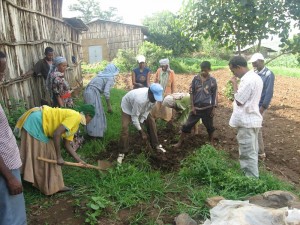
The Awra Amba community and school gardens are now part of the Slow Food 10,000 Gardens in Africa project. The funds received, combined with support from other donors, have given Awra Amba community the possibility to afford the purchase and installation of a solar powered water pump, as well as provide training, seeds and tools.
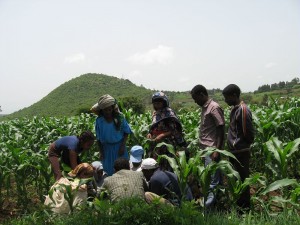
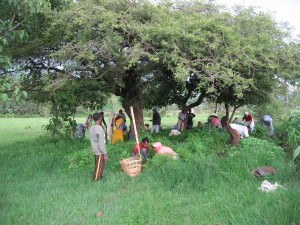
Two reasonably sized beds (600m2) have been set aside for cultivating vegetables such as lettuce, tomato, chili peppers, swiss chard (costa), local kale, pumpkins, sweet potatoes and beetroots. The community already had two moringa trees that survived out of the many seedlings they planted a couple of years ago. They explained that they lost the other seedlings due to a shortage of water during the dry season. The nutritional, medicinal and financial benefits of cultivating moringa have been thoroughly explained during the training sessions to members of the Awra Amba agricultural committee. Major components of establishing a local nursery were also discussed.
Besides the community garden, Awra Amba community members who have enough space near their houses utilize their back or front yards as home gardens, where free range chickens can often be seen running around.
Half of the community land is dedicated to a grazing area reserved for the free range cattle owned by the community.
The main focus of the Awra Amba community garden as part of the Slow Food Ten Thousand Gardens in Africa project is to help diversify the community’s food production in order to ensure food security and the survival of the community in the long run and convince them to gradually move away from chemical fertilizers while also improving the fertility of their soil using compost and other soil improvement techniques.

Area
Fogera Wereda, South Gondar administrative zone, Amhara region

Coordinator
Tiginesh Mitik Beyene

For more information about the Awra Amba community visit the following websites:
http://www.visitawraamba.com/
http://awraamba.webs.com/
http://awraamba.webs.com/Journey%20to%20peace%20Edited.pdf
Products

  • Lettuce
  • Tomato
  • Chilies
  • Chard
  • Sweet potato
  • Beetroot
  • Moringa stenopetala
  • Curly kale
  • Pumpkin (C. maxima)

Slow Food in Ethiopia

Slow Food has been active in Ethiopia since 2006, launching numerous projects in support of the most vulnerable local communities: nomadic herders, traditional forest beekeepers, wild coffee harvesters, indigenous groups and others. Through the Presidia and working with the communities, training activities have been run to strengthen the organization of small-scale producers and to promote and improve the quality of various foods like honey, camel milk, coffee, traditional grains and spices. Slow Food coordinators promote agroecological techniques—applying them in school and community food gardens—in the most diverse ecosystems, from forests and highlands to nature reserves and semi-arid zones. They are also working to save biodiversity and traditional knowledge. A number of educational projects have objectives that include the involvement of young people and women and awareness-raising around themes of strategic importance at a national and international level: the privatization of resources, the use of toxic chemicals in agriculture, the right to land. Educational materials have been produced in Amharic and Oromo, the main local languages. Every year, Ethiopian delegates participate in Slow Food’s international events (Salone del Gusto and Terra Madre, Indigenous Terra Madre, Cheese, Terra Madre Giovani and more) as well as other events thanks to collaborations with different organizations.

Garden Informations

Type:Community Garden
Surface in m2:600
People involved:510
Coordinator:Tiginesh Mitik Beyene
Sibling with:Table for Two International

Photos

Subscribe to the newsletter

Slow Food gratefully acknowledges funding support from European Union. The contents of this website are the sole responsibility of Slow Food and the CINEA is not responsible for any use that may be made of the information contained therein.
Slow Food - P.IVA 02743970044 - Privacy Policy - Cookie Policy - All rights reserved
Powered by Blulab