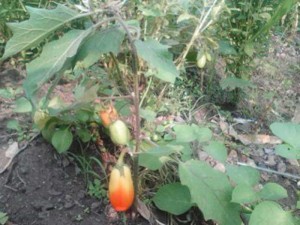
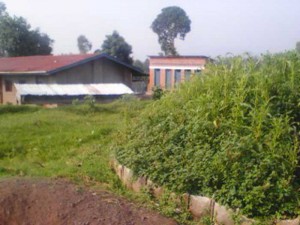
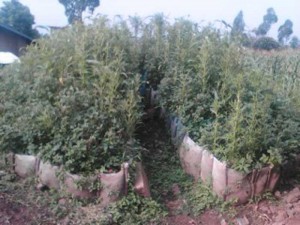
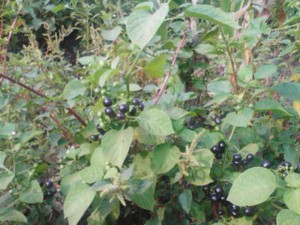
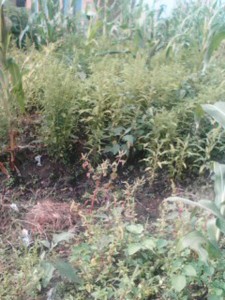
This 600m2 garden is found in Musanze, a town in the district of the same name that lies in the country’s Northern Province, in the Muhoza sector in an elementary school of Bukane. The school’s roughly 650 students, adopted by Compassion International (an NGO of Pentecostal churches), are here to learn. Mixed cropping is in place in this garden (cultivated with amaranth, eggplant, tomatoes, Urdega, Isogo, and corn). Urudega and Isogo are traditional, local vegetables, used in traditional medicinal practices to cure gastro-intestinal problems and worms. These vegetables are at risk of extinction and indeed it is rare to find them at the table; some students don’t even know about them.
The children work in the garden to cultivate and harvest the vegetables. They are also in charge of cooking at least once per month, in a sort of festive day which takes place on the last Saturday of each month with the children, teachers, and family members; everyone eats, drinks, and shares ideas on this day.
Rabbit droppings are used to fertilize the soil and in the dry season the children are also in charge of watering the plants. The school learned about Slow Food because one of the teachers was interested in putting Slow Food’s philosophy in action here (and indeed the garden has improved thanks to the sole use of droppings instead of chemical fertilizers). Support and advice is also given to them on what kinds of insecticides to use, through the training realized by the Slow Food local convivium; this helps them understand the issues of health and the economy as well.
Area
Gahondogo Village, Muhoza sector, Musanze district, northern province
Coordinator
Adolphe Habimana