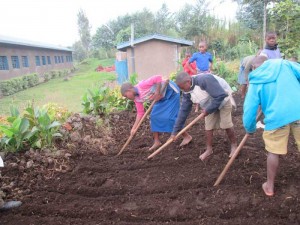
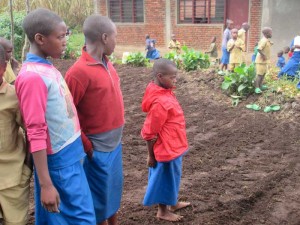
This 20m2 school garden is found in the Cyuve sector, in the Musanze district in the country’s north. The school currently has about 400 students and 11 teachers, but the group involved in cultivating the garden counts 30 students ranging in age from nine to eleven years old.
The school is situated in a valley that has a favorable climate, and despite the fact that the soil is sandy, crops can grow here fairly well. The region is volcanic and some of the crops that are cultivated on a rotating basis include: onions, potatoes, cabbage, and corn. This garden was established in 2015 thanks to the initiative of the Slow Food Ruhengeri convivium, which noticed that the students were not taught about agricultural practices. The school was contacted by Slow Food, through the same convivium, in January 2015.
A part of the harvest is sold and the revenues are used to offset some of the schools expenses.
The garden also acts as an educational tool; at times it is used by the teachers to explain various points in their lessons.
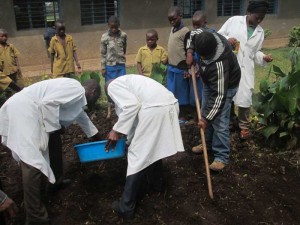
The soil is fertilized with manure from the school’s cow and compost that the students produce directly at school. All natural methods are also used in the fight against pests, like the use of ash.
Area
Cyuve Sector, Musanze district, northern province
Coordinator
Prosper Uwiragiye