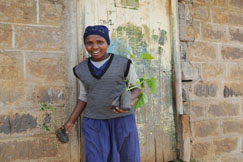
The village of Marioshoni rises on the Rift Valley plateaus in the Mau forest, the largest indigenous montane forest in eastern Africa. The Ogiek community traditionally lives off the hunting of small animals and gathering of wild fruits and honey. However, the intensive exploitation of the forest for agricultural use by deforestation companies and illegal colonists prevents the Ogiek people from living according to their century-old practices. For this reason, the community has been forced to farm to ensure its livelihood.
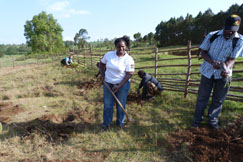
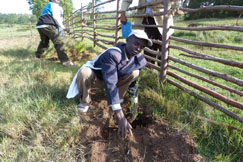
The Marioshoni school garden plays a very important role in bringing children and their families closer to farming. The ½ hectare garden is behind the school buildings, enclosed by a fence made with wooden poles. Pupils are followed by Chesang, the school principal, the teachers and the village elderly, who still keep the Ogiek tradition alive.
Through the project, and in cooperation with Network for Ecofarming in Africa, training on sustainable agricultural practices will be offered to pupils and the community, and the school will be equipped with all the necessary materials for the work in the garden.
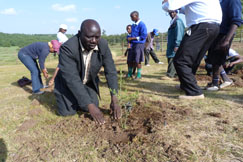
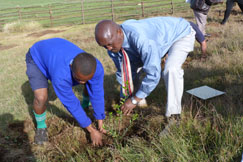
On June 17th, the Marioshoni garden was visited by the participants in the workshop on the One Thousand Gardens Project in Africa, held in Nakuru (June 15th-17th) for the Anglo-Saxon countries involved in the project. Kids and mamas (old women) welcomed guests dancing and singing with traditional costumes (made with the furs of the Mau forest animals) and painted faces. After the celebrations, guests and the Marioshoni community gathered in the lawn behind the school where, in front of 200 people, principal Rose Chesang told about the school dark years – from 1987 to 1992 –, when the Ogiek people were chased away from the forest. Now, finally, the Ogiek are back and their children can go to school again.
Area
Marioshoni village (Mau forest), Molo district, Nakuru county, Rift Valley province
Coordinator
Rose Chesang