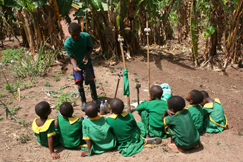
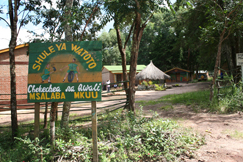
The Nambehe primary school is close to the Msalaba Mkuu parish, and among the buildings housing the classrooms and cafeteria is the Slow Food garden.
The school is in the village of Msindo, in the Namtumbo province of southern Tanzania. The 80 children, aged between 3 and 6, are divided into two classes. The youngest, aged between 3 and 5, attend nursery (chekechea in Swahili) while the older children, aged between 5 and 6, study in the first year (awali). The school was built in 1965 and expanded in 2007 with the help of the CO.P.E. NGO and the local people.
The community has continued to play an active role in school life. According to national law, in Tanzania schools are public from primary level (from age 6 or 7), while education before the age of 6 is entrusted to private institutions (religious orders, national private associations or international NGOs). In the case of Msalaba Mkuu, the school is run by a partnership between CO.P.E. and the Diocese of Songea, with active participation from the community members. Technical, logistical and financial administration is entrusted to a committee of eight parents of children who have attended or are currently attending the school. The committee is run on an entirely volunteer basis, and its activities are essential to managing the school.
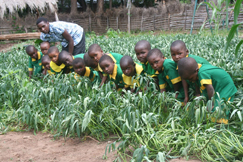
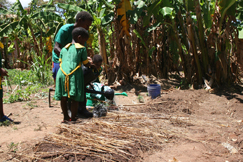
The school already had a food garden, which was planted with tomatoes, onions, chili peppers, corn, amaranth, beans, okra, sweet potatoes and other local vegetables. Near the entrance is a chicken coop, with around 50 hens, and a small pen for raising goats for milk. A large banana grove and some papaya trees are also planted in the garden. Water is available year-round thanks to a well that draws directly from the groundwater. With the school’s involvement in the Slow Food Gardens in Africa network, it has been possible to create an orchard planted with mango, guava, orange, lemon and avocado trees. This means the children will have fruit for their snacks throughout the school year.
Education activities based around the environment and sustainable agriculture were begun in October and November, including lessons on the use of traditional edible plant varieties. One of the project’s main aims is the education of younger generations.
Area
Msalaba Mkuu, Msindo village, Namtumbo district, Ruvuma region
Coordinators
The project is coordinated by members of the parents’ committee, and is led by the committee secretary, Engriberth Ngonyani, and the treasurer, Maria Ngonyani.