Slow Food
  • Donate
  • Join us
  • Italian
  • English
Slow Food Foundation

Search

  • Home
  • About us
    • What is the Foundation?
  • What We Do
    • Slow Food Gardens in Africa
    • Slow Food Presidia
    • Ark of Taste
    • Slow Food Cooks’ Alliance
    • Earth Markets
    • What is the Narrative Label?
  • Get involved
    • Why Support Us
    • Italian Slow Food Presidia Sponsors
  • Multimedia
    • Publications
    • Video
    • Gallery
    • News archive
    • Photo archive
  • Contacts
Slow Food Foundation Slow Food Foundation
  • Home
  • About us
    • What is the Foundation?
  • What We Do
    • Slow Food Gardens in Africa
    • Slow Food Presidia
    • Ark of Taste
    • Slow Food Cooks’ Alliance
    • Earth Markets
    • What is the Narrative Label?
  • Get involved
    • Why Support Us
    • Italian Slow Food Presidia Sponsors
  • Multimedia
    • Publications
    • Video
    • Gallery
    • News archive
    • Photo archive
  • Contacts

Search

Home » 10.000 Orti in Africa » Gaindé Fatma School Garden, Mbour

Gaindé Fatma School Garden, Mbour

Back to the archive >

Senegal

Thiès

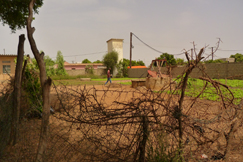
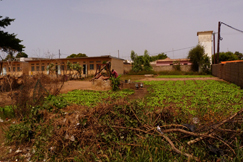
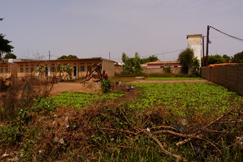
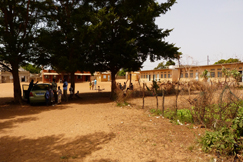
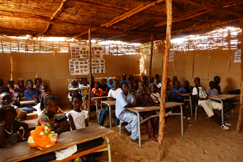
The Mbour elementary schools has more than 1000 students, aged 7-13. Following the advice from an old man from the area, Aide et Action, Agrinas and the Association of natural farmers from Senegal, teachers and students have set up a small educational garden, which covers about 1000 m². A couple of kilometers from the school, the Atlantic Ocean washes the shores of the Mbour beach. For this reason, the garden sandy soil is rather wet. The parcel is at the entrance of the school courtyard and its borders are defined by the school fencing walls on two sides, and wire fence on the other two. Teachers and a small group of workers take care of the garden, where they grow eggplants, lettuce, carrots, onions, beets, bissap and some medicinal plants. In order to control diseases and pests, students learn how to use concoctions made with tobacco, chilies and neem powder. They use manure to fertilize the soil. The school does not have a nursery yet, and seeds are bought from a local farmer.
In the garden, students help eradicate weeds, they study geometry and calculate the harvest yield.

Area
Mbour elementary school, department of Mbour, Thiès region

Coordinators
Mame Malick Ndiaye and Birahim Dieye
Slow Food in Senegal

Despite a diversified industrial base, agriculture and fishing are the dominant sectors in Senegal’s national economy and employ 50% of the active population. Agriculture, in particular, underwent profound transformations during the colonial period, with the gradual replacement of subsistence crops with monocultures destined primarily for export, like peanuts. This led to changes in the food habits of the Senegalese. For example, in urban areas rice is now eaten every day instead of millet and fonio; though hardy, better suited to the local environment and incredibly nutritious, these grains are now considered “poor.” The Slow Food network has been developing here since 2004, working on food education in schools and creating educational food gardens. The mapping of local foods and dishes led to the creation of the Fadiouth Island Salted Millet Couscous Presidium. Members of Italy’s Senegalese diaspora are now also getting involved in setting up sustainable agricultural activities in their home country.

Garden Informations

Type:School Garden
Coordinator:Mame Malick Ndiaye
Sibling with:Pro Loco Nizza Monferrato - Slow Food Colline Nicesi Convivium, Italy

Photos

Subscribe to the newsletter

Slow Food gratefully acknowledges funding support from European Union. The contents of this website are the sole responsibility of Slow Food and the CINEA is not responsible for any use that may be made of the information contained therein.
Slow Food - P.IVA 02743970044 - Privacy Policy - Cookie Policy - All rights reserved
Powered by Blulab