Slow Food
  • Donate
  • Join us
  • Italian
  • English
Slow Food Foundation

Search

  • Home
  • About us
    • What is the Foundation?
  • What We Do
    • Slow Food Gardens in Africa
    • Slow Food Presidia
    • Ark of Taste
    • Slow Food Cooks’ Alliance
    • Earth Markets
    • What is the Narrative Label?
  • Get involved
    • Why Support Us
    • Italian Slow Food Presidia Sponsors
  • Multimedia
    • Publications
    • Video
    • Gallery
    • News archive
    • Photo archive
  • Contacts
Slow Food Foundation Slow Food Foundation
  • Home
  • About us
    • What is the Foundation?
  • What We Do
    • Slow Food Gardens in Africa
    • Slow Food Presidia
    • Ark of Taste
    • Slow Food Cooks’ Alliance
    • Earth Markets
    • What is the Narrative Label?
  • Get involved
    • Why Support Us
    • Italian Slow Food Presidia Sponsors
  • Multimedia
    • Publications
    • Video
    • Gallery
    • News archive
    • Photo archive
  • Contacts

Search

Home » 10.000 Orti in Africa » Teverit community garden

Teverit community garden

Back to the archive >

Mauritania

Nouakchott

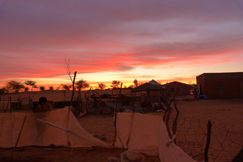
The village of Teverit is little more than a few dozen small houses in the desert, 25 kilometers from Nouakchott, along the sandy road that leads south towards Senegal. In recent months new families of nomadic farmers have settled in the village, pushed east by drought. Food-growing is not traditional in the area. Fruits and vegetables come from other parts of the country, or often from Senegal and Morocco.
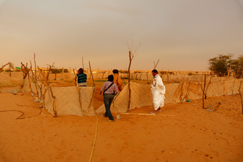
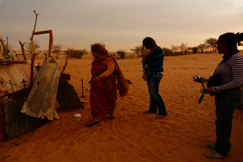
Around 10 village women now manage a food garden, which is located in a farm where goats and dromedaries are raised. Their manure is used to fertilize the soil. Carrots, turnips, beets, tomatoes, cucumbers, mint and other herbs are grown in an area fenced with repurposed materials, wire and fabric that help protect the garden from the sand carried by the wind. For irrigation, water is collected from a cement tank in the middle of the garden using watering cans. To keep the soil damp, it is covered with seashells, which are easily found lying around. The women are working to improve the garden by creating a shelter using neem trees (also useful as a natural insecticide), prickly pears and the local Mekké variety of corn, which would slow and filter the wind.

Area
Teverit village, Nouakchott region

Coordinator
Nedwa Moctar Nech
Slow Food in Mauritania

Mauritania is a country lying between the Maghreb and sub-Saharan Africa, where the desert meets the ocean. The waters along its 700-kilometer coast are some of the most fish-rich in the world. Fishing is the dominant sector in the national economy, but nomadic livestock farming is also important. The Slow Food network has been developing here since 2006 and works to preserve small-scale fishing, under threat from a perverse system in which industrial fleets, often foreign, plunder the marine resources to the detriment of the local fishing communities who rely on their catch for sustenance and income. In order to tackle these challenges, Slow Food, the Orbetello fishermen’s cooperative from Tuscany, the local NGO Mauritanie2000 and the French salt producers’ association Univers Sel joined together to promote local botargo production with a Presidium for mullet botargo . They also started a solar salt-making project in Nouadhibou. In parallel, the association of food producers and livestock farmers has developed many agroecological community food gardens in the area around the Senegal River.

Garden Informations

Type:Community Garden
Coordinator:Taleb Mohamed Ben Aouf
Sibling with:Sebana Onlus, Italy

Photos

Subscribe to the newsletter

Slow Food gratefully acknowledges funding support from European Union. The contents of this website are the sole responsibility of Slow Food and the CINEA is not responsible for any use that may be made of the information contained therein.
Slow Food - P.IVA 02743970044 - Privacy Policy - Cookie Policy - All rights reserved
Powered by Blulab