Slow Food
  • Donate
  • Join us
  • Italian
  • English
Slow Food Foundation

Search

  • Home
  • About us
    • What is the Foundation?
  • What We Do
    • Slow Food Gardens in Africa
    • Slow Food Presidia
    • Ark of Taste
    • Slow Food Cooks’ Alliance
    • Earth Markets
    • What is the Narrative Label?
  • Get involved
    • Why Support Us
    • Italian Slow Food Presidia Sponsors
  • Multimedia
    • Publications
    • Video
    • Gallery
    • News archive
    • Photo archive
  • Contacts
Slow Food Foundation Slow Food Foundation
  • Home
  • About us
    • What is the Foundation?
  • What We Do
    • Slow Food Gardens in Africa
    • Slow Food Presidia
    • Ark of Taste
    • Slow Food Cooks’ Alliance
    • Earth Markets
    • What is the Narrative Label?
  • Get involved
    • Why Support Us
    • Italian Slow Food Presidia Sponsors
  • Multimedia
    • Publications
    • Video
    • Gallery
    • News archive
    • Photo archive
  • Contacts

Search

Home » 10.000 Orti in Africa » Sekem School Garden

Sekem School Garden

Back to the archive >

Egypt

Sharqia

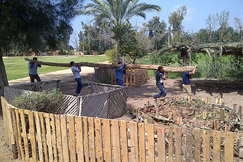
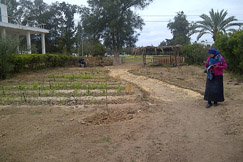
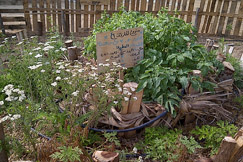
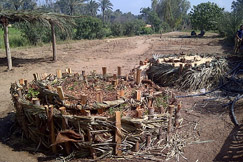
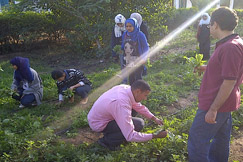
The Sekem school is located on the Sekem Community farm close to the city of Belbeis, Sharkeya, Egypt. The school educational garden measures around 700 m2, and it has been organically farmed for the past 35 years. Some of the seeds are already saved for the following seasons. All Sekem school students (around 300 each school year) have agriculture class twice a week (3 hours per week) for two months per year (in Egypt the school year is from end of September until April). Mr. Saeed, the agriculture teacher is very passionate about agriculture and extremely motivated to develop the school garden. Some of the current plants in the garden are: beans, spinach, arugula, lettuce, onions, radish, parsley, and coriander, but also types like calendula, sunflower, and alfalfa. In the coming months we are planning on redesigning the garden into a more children/student friendly pattern, and also making the classes more attractive to students. We want to integrate permaculture and other sustainable agriculture methods in the designing process. Finally, we want the students to not only know, but also really internalize and digest the fact that agriculture is an essential part of their lives!

For more information please visit: http://sekemschoolgarden.wordpress.com

Area
Belbeis, Sharkeya

Coordinator
Soraya Abouleish
Slow Food in Egypt

Egypt has undergone a dramatic political change during the last four years. The time immediately after the January 25 Revolution in 2011 saw a growth in the civil society movement and increased political activism and entrepreneurial efforts. Three years later, however, the government started to crack down on civil society organizations and put pressure on foreign foundations. Within this context, a general withdrawal into the private sphere has been seen. The increased interest in urban food gardening has been one of the consequences of this process. A relatively risk-free activity, it allows people to shape and change their immediate environment and to literally grow the change they want to see. Against this background, the Slow Food gardens have a clear educational mission: The garden is used to spread knowledge about environmental and ecological topics, to teach the importance of food quality and to foster skills like responsibility, collaboration and communication. At the same time, gardeners young and old have access to fresh, nutritious produce and can learn about the traditional varieties and food cultures of their country. Beyond Cairo, where urban gardens have played an important role in building the Slow Food network, new convivia are forming around various other issues: responsible fishing (Matruh), date biodiversity (Siwa), poultry breeds (the Bigawi Chicken Presidium in Fayoum) and sustainable tourism and the revival of indigenous gastronomy in Sinai.

Garden Informations

Type:School Garden
Coordinator:Bianca Fliss
Sibling with:Slow Food Worcestershire Convivium, UK

Photos

Subscribe to the newsletter

Slow Food gratefully acknowledges funding support from European Union. The contents of this website are the sole responsibility of Slow Food and the CINEA is not responsible for any use that may be made of the information contained therein.
Slow Food - P.IVA 02743970044 - Privacy Policy - Cookie Policy - All rights reserved
Powered by Blulab