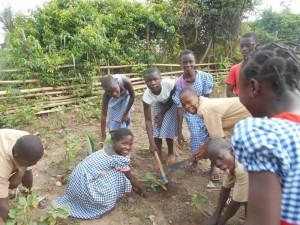
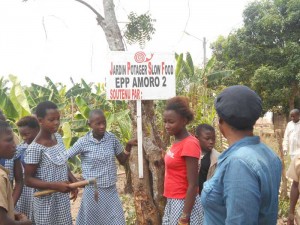
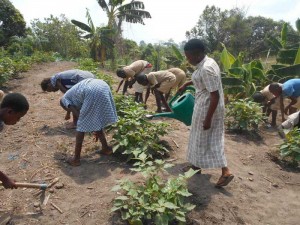
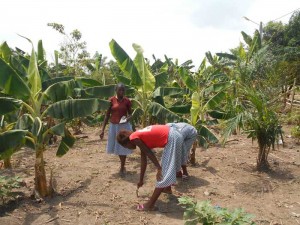
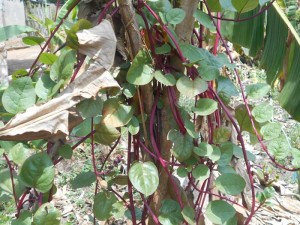
The Amoro II school garden is found in Attobrou village, in the Agboville Department in southern Ivory Coast, about 100 km outside of Abidjan, the economic capital of the country. Attobrou is a village situated on a slope that has quite rough terrain. Amoro II is the village’s second school, founded in 1965, and today has six classes (from CP1 to CM2) taught by six teachers for the 272 students aged between 6 and 15 years old. The 600 m2 school garden is found behind the building. Among the crops grown here are n’drowa eggplant, local spices, cocoyam, sugar cane, plantains, peppers, and okra. There are also some acacia trees that serve to give the plants shade. A few African basil plants act as natural pesticides, but they are also useful in childcare, for example against the cold, headaches, and sinusitis. The garden is cultivated and managed by the older students from the classes ranging from CE2 to CM2, although the younger students also use the garden for didactic purposes. The school’s coop takes care of the garden’s management with help from the one of the members who is also a teacher. The Coop’s president and his eight aids are elected by the student body. The school has a makeshift cafeteria, and the harvest is sold to it, as the students don’t eat there since they are always in the garden. The profits from the sale of the produce are used to pay for some small school expenses and for the end of the year party.
Amoro II’s garden is also used for didactic purposes; it is often used by the teachers as an example in their geography and science classes (to explain germination and plant development in a more concrete way). The soil is fertilized with manure while pests are fought off with all natural methods, such as ashes and tobacco powder.
Area
Attobrou Village, Agboville department, Agneby region
Coordinator
Huie Célestine Djedji