Slow Food
  • Donate
  • Join us
  • Italian
  • English
Slow Food Foundation

Search

  • Home
  • About us
    • What is the Foundation?
  • What We Do
    • Slow Food Gardens in Africa
    • Slow Food Presidia
    • Ark of Taste
    • Slow Food Cooks’ Alliance
    • Earth Markets
    • What is the Narrative Label?
  • Get involved
    • Why Support Us
    • Italian Slow Food Presidia Sponsors
  • Multimedia
    • Publications
    • Video
    • Gallery
    • News archive
    • Photo archive
  • Contacts
Slow Food Foundation Slow Food Foundation
  • Home
  • About us
    • What is the Foundation?
  • What We Do
    • Slow Food Gardens in Africa
    • Slow Food Presidia
    • Ark of Taste
    • Slow Food Cooks’ Alliance
    • Earth Markets
    • What is the Narrative Label?
  • Get involved
    • Why Support Us
    • Italian Slow Food Presidia Sponsors
  • Multimedia
    • Publications
    • Video
    • Gallery
    • News archive
    • Photo archive
  • Contacts

Search

Home » 10.000 Orti in Africa » Harison Nassari Family Garden

Harison Nassari Family Garden

Back to the archive >

Tanzania

Kilimanjaro

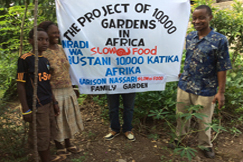
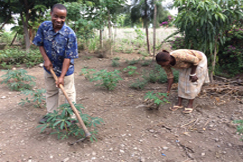
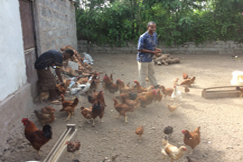
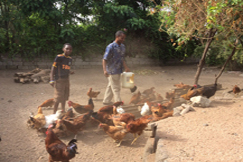
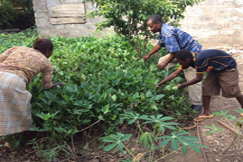
The Harison Nassari garden was established by the joint efforts of Harison Nassari and his wife Elizabeth Mushi to improve the family’s nutrition and to sell the surplus of vegetables to their neighbors. The garden is one quarter of an acre on flat, dry land below Mount Kilimanjaro. The garden is planted with potato leaves, amaranth, cassava, pigeon peas, blackberry, avocado, papaya and passion fruits. The family also keeps indigenous chickens to produce manure which helps to fertilize the soil, to improve the family’s nutrition and their income. The family wants to diversify the varieties of crops grown by increasing the number of traditional vegetables and medicinal plants. The next step to develop the garden is to purchase a tank to collect rain water and attend training sessions or organic farming, seed saving and sharing.

Area
Boma ng’ombe Village, Hai district

Coordinators
Harison Nassary
Elizabeth Mushi
Products

  • Chinese spinach (A. dubius)
  • Sweet potato leaves
  • Cassava
  • Avocado
  • Papaya
  • Pigeon pea
  • Passion fruit
  • Blackberry

Slow Food in Tanzania

Slow Food has been developing activities in Tanzania since 2004, when over 20 delegates from the country participated in the first Terra Madre event in Turin, Italy. Now local Slow Food groups are promoting good, clean and fair food across the country, primarily in the north (Kilimanjaro, Meru and Arusha), along the coast (Dar es Salaam region) and in the central-east (Morogoro, Dodoma and Singida). The largest country along Africa’s eastern coast, Tanzania experimented with “Ujamaa” socialism under President Julius Nyerere, one of Africa’s most enlightened 20th-century politicians, who led the country after independence in 1961. Much was invested into education and literary programs, community development and the agricultural sector. Positive effects, such as a lively and pervasive entrepreneurial spirit, can still be seen in this relatively stable country, despite the devastating spread of HIV, which has laid waste to multiple generations and left thousands of orphans, profoundly changing family and social structures. Women, particularly those who are now elderly, are confident and educated, and can act as agents of important change at a socio-political level and as the driving force behind local economies. The initiatives carried out by the Slow Food network to create awareness, achieve food sovereignty and improve everyday nutrition include the safeguarding of traditional beekeeping, the rediscovery of wild vegetables and herbs, the mapping of local banana varieties, the integration of food-growing into school programs, the spread of agroecological practices to improve farmers’ resilience and autonomy and the valuing of the role of young people in training and awareness-raising activities. The major challenges to be addressed are linked to the lack of availability of native seeds and organic inputs, thanks to government policies that favor industrial agriculture and allow foreign investors to indiscriminately take over arable land. In January 2017, the Tanzanian government passed a law that gives Western agribusiness investors faster and better access to agricultural land and strong protection of intellectual property rights, in exchange for development aid. Under this new law Tanzanian farmers are subject to a minimum jail term of 12 years and a fine of over €200 if they sell seeds that are not certified.

Garden Informations

Type:Community Garden
Surface in m2:1011
People involved:2
Slow Food Convivium:Lishe Convivium
Coordinator:Helen Tibandebage Nguya
Sibling with:Eataly, Italy

Photos

Subscribe to the newsletter

Slow Food gratefully acknowledges funding support from European Union. The contents of this website are the sole responsibility of Slow Food and the CINEA is not responsible for any use that may be made of the information contained therein.
Slow Food - P.IVA 02743970044 - Privacy Policy - Cookie Policy - All rights reserved
Powered by Blulab